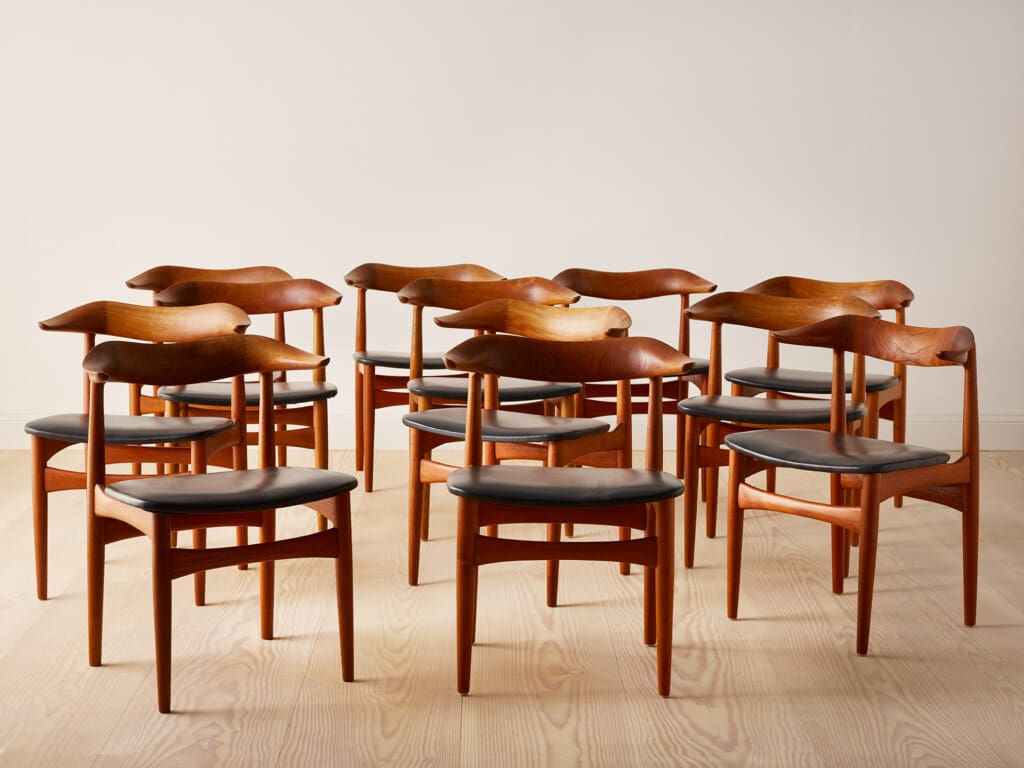
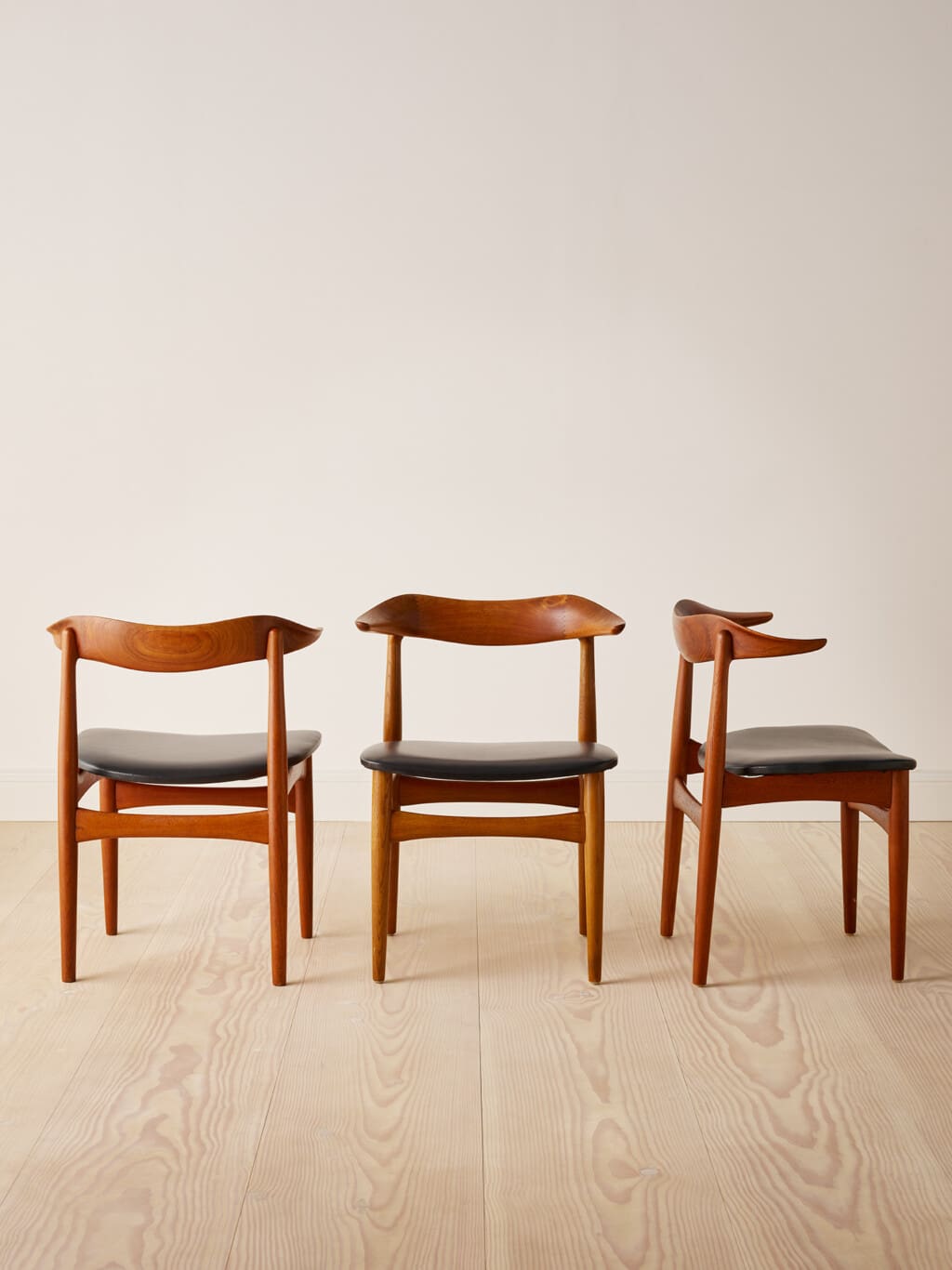
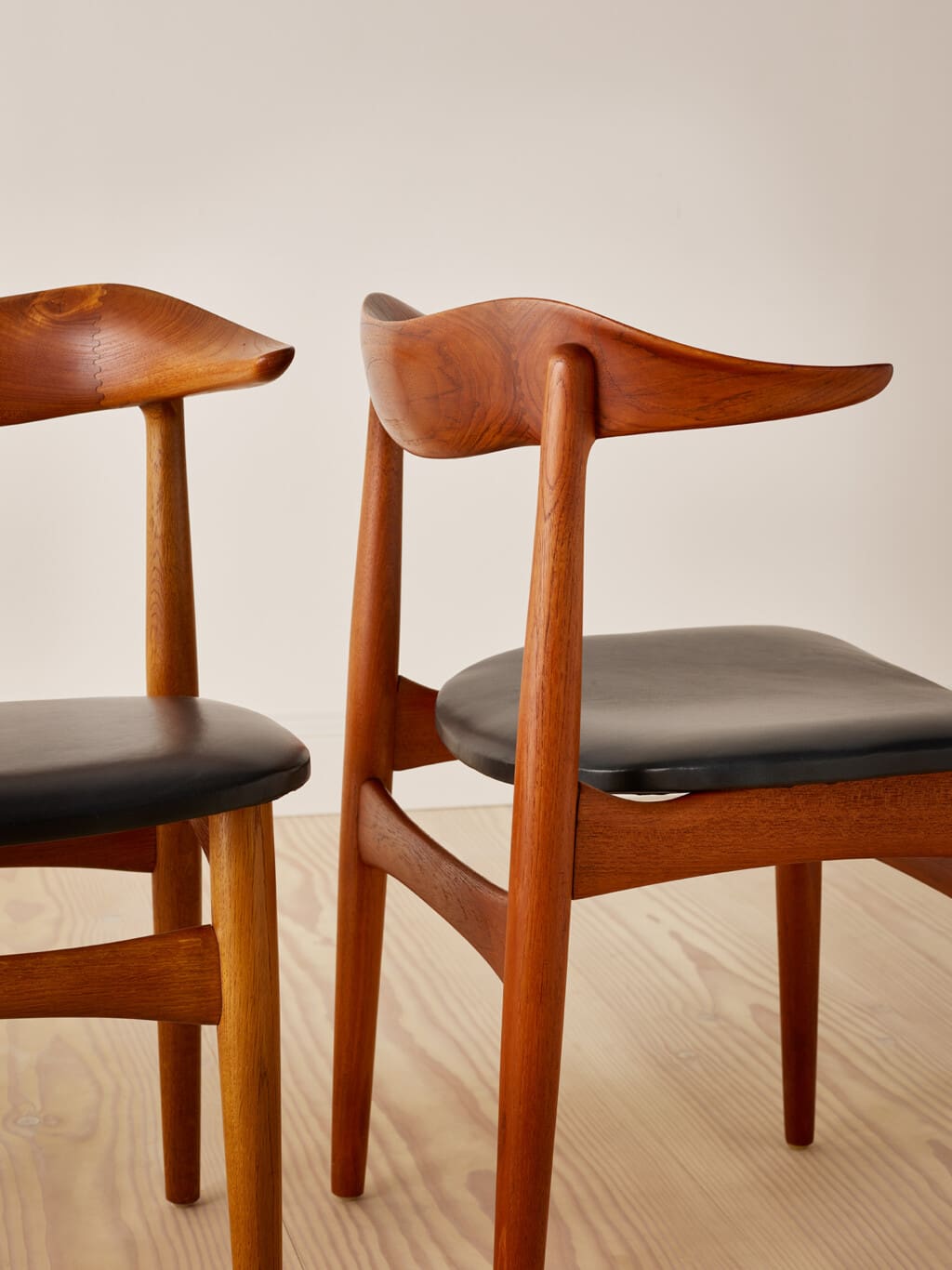
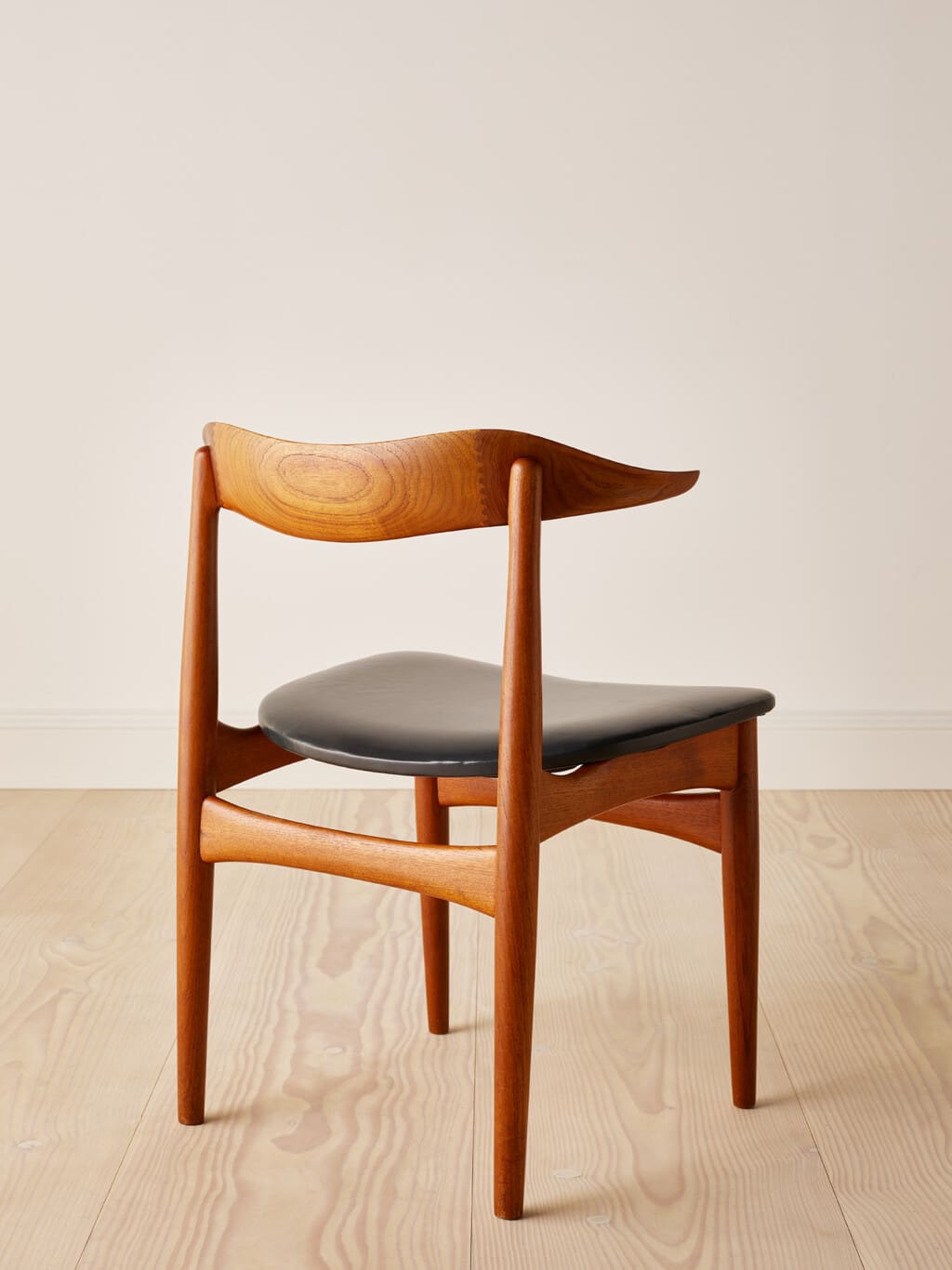
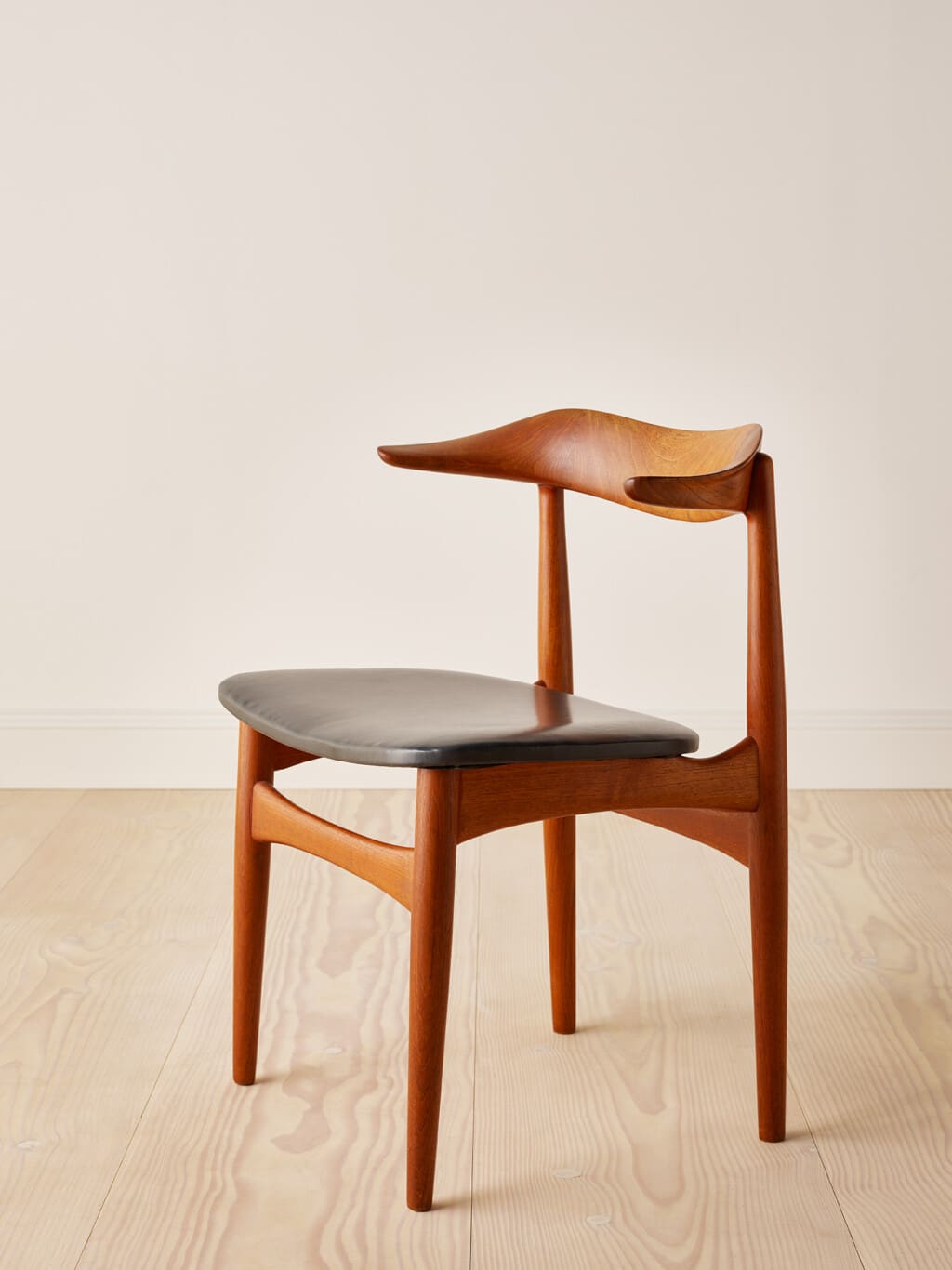
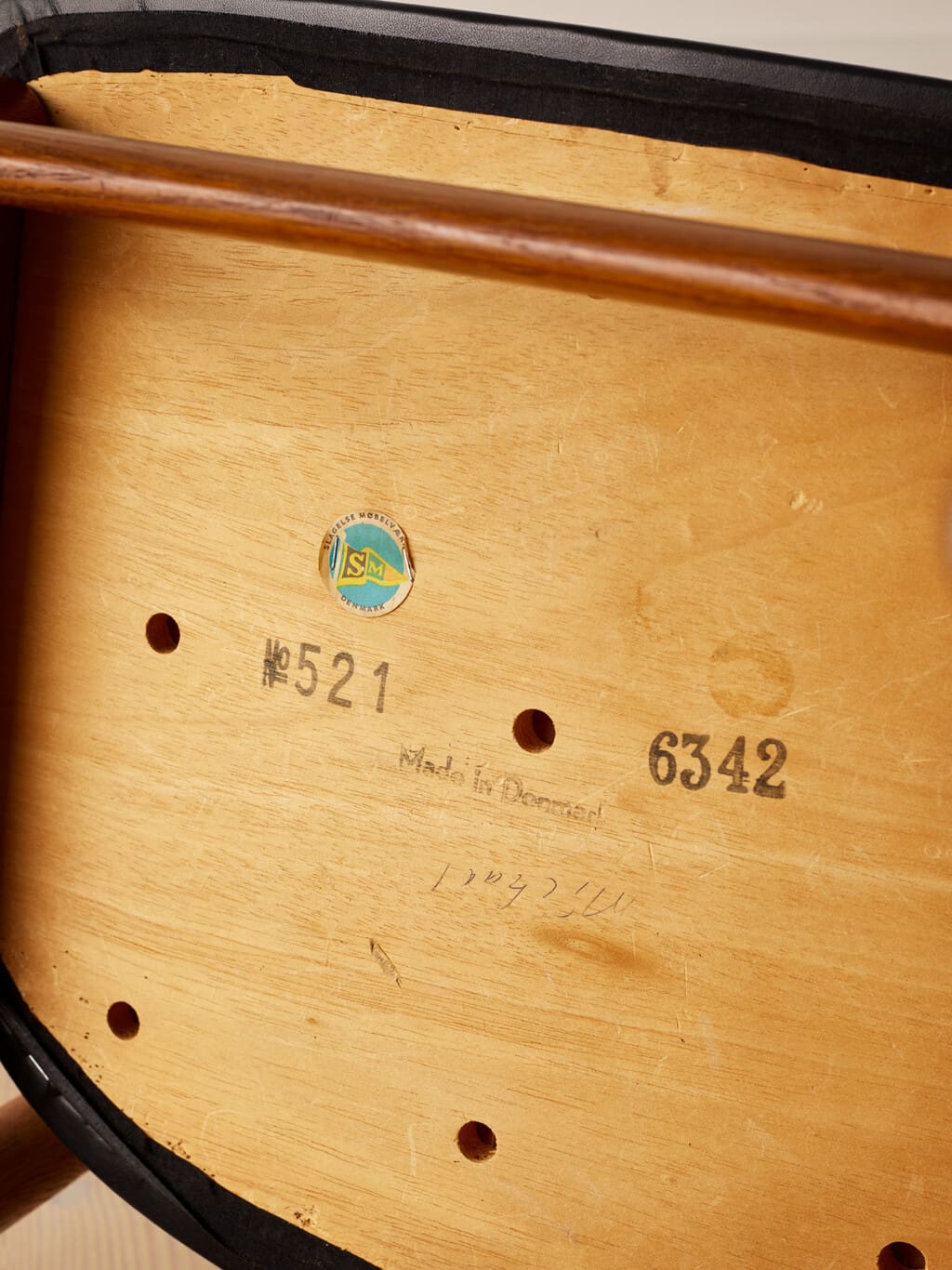
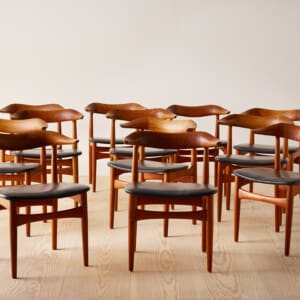
A unique set of 12 dining chairs in oak, teak and leather, Model SM521 “Cowhorn chair” by Knud Færch, 1950’s Denmark
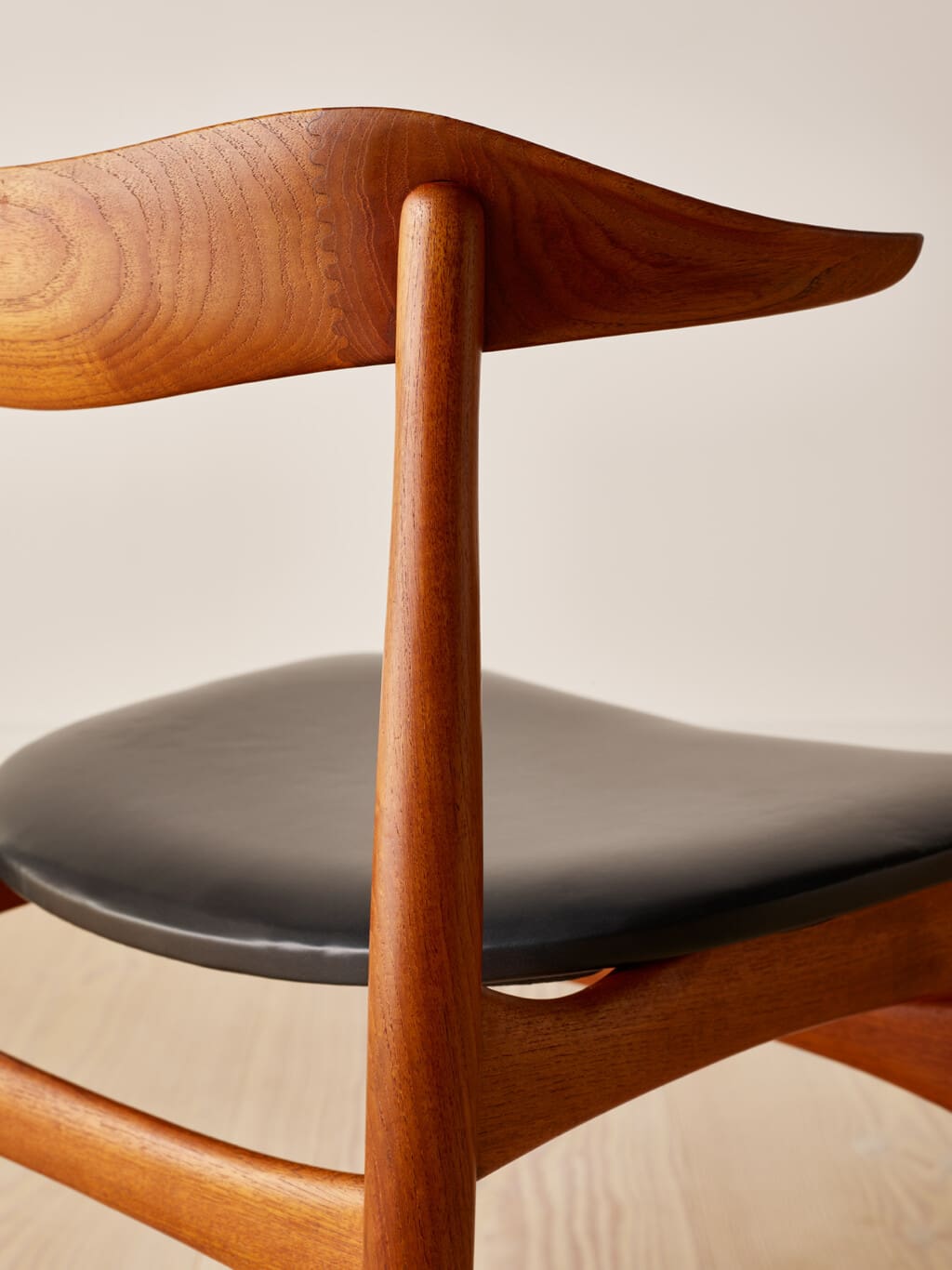
Here is a unique opportunity to acquire a set of no less than 12 dining chairs in the rare and sought-after model chair model “SM 521” or “The Cowhorn chair” designed by furniture designer Knud Færch and produced by Slagelse Møbelfabrik in Denmark in the 1950’s. These amazing chairs showcase Danish craftmanship at its finest with impressive joinery in the backrest and with its original patina visible on both leather seat and frame, the original condition can only be described as impeccable.
4.278.000 JPY
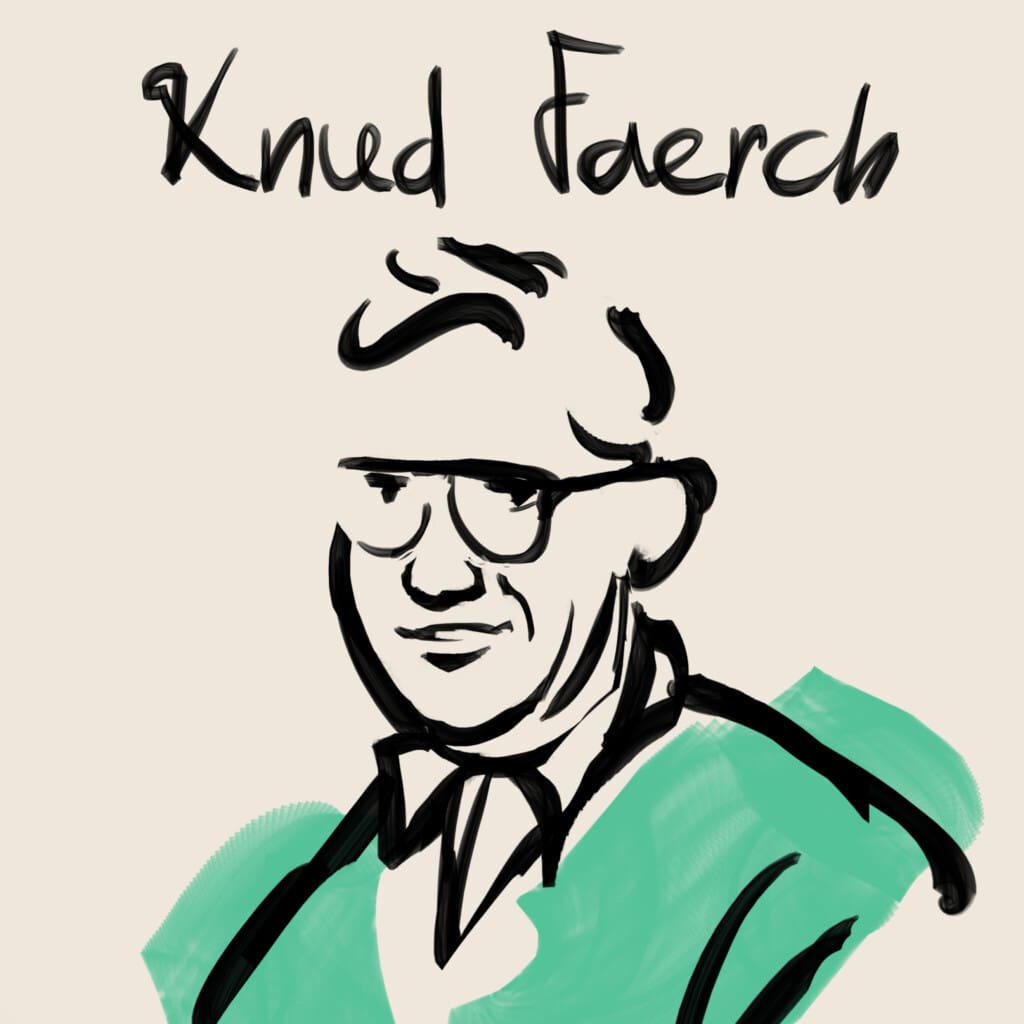
Knud Faerch
Knud Faerch (born 28 October 1931 – 26 May 2013) was a Danish architect and a prominent figure in modern architecture, particularly known for his work within the context of Danish functionalism and the postwar international style. His architectural career spanned several decades, during which he worked on a wide range of projects, including public buildings, housing, and urban planning.
Faerch’s style was characterized by an emphasis on simplicity, functionality, and the use of modern materials. He was one of the key figures in Denmark’s postwar architectural scene, contributing to the development of both domestic and public architecture in the mid-20th century. His work often featured clean lines, open spaces, and a focus on light and air circulation.
In addition to his architectural practice, Faerch was also an educator and writer. He contributed to the theoretical and philosophical discourse on architecture in Denmark, influencing generations of architects through both his professional projects and his teaching.
Some of his most notable works include residential buildings, educational institutions, and urban planning projects, all marked by their practical design and integration into the surrounding environment. Faerch’s influence extended beyond just the physical design of buildings, as he was also concerned with how architecture could enhance the quality of life for its inhabitants.
More objects you might like
-
-
-
 A unique set of 12 dining chairs in oak, teak and leather, Model SM521 "Cowhorn chair" by Knud Færch, 1950's Denmark4.278.000 JPY Remove item
 -
 Round pine dining table with eight armchairs by Rainer Daumiller for Hirtshals Savværk. Denmark, 1970s1.026.800 JPY Remove item
 -
-
Prices are shown exclusive of any local taxes or duties that may apply.